Launch offer — valid today only

MBLEx Prep, Drawn: See Why the Answer Is Right With Every Concept Drawn Step by Step!

Planes of motion, origin and insertion, contraindications, the session order, ethics. In your notes it's a wall of text. Here each topic fits on one page: the drawing and what you need to remember. 65 illustrated pages.

I WANT TO STUDY IT WITH DRAWINGS

🔒 Secure checkout · PDF by email · 30-day guarantee

One topic per pagethe drawing shows you the concept and the text walks you through it
65 illustrated pages11 parts, from how the exam works to test day
Up-to-date sourcesFSMTB Content Outline, Candidate Handbook and OpenStax A&P 2e

This Is What the Pages You Will Study Look Like

One topic per page: a drawing that shows how it works, and boxes with what you need to know:

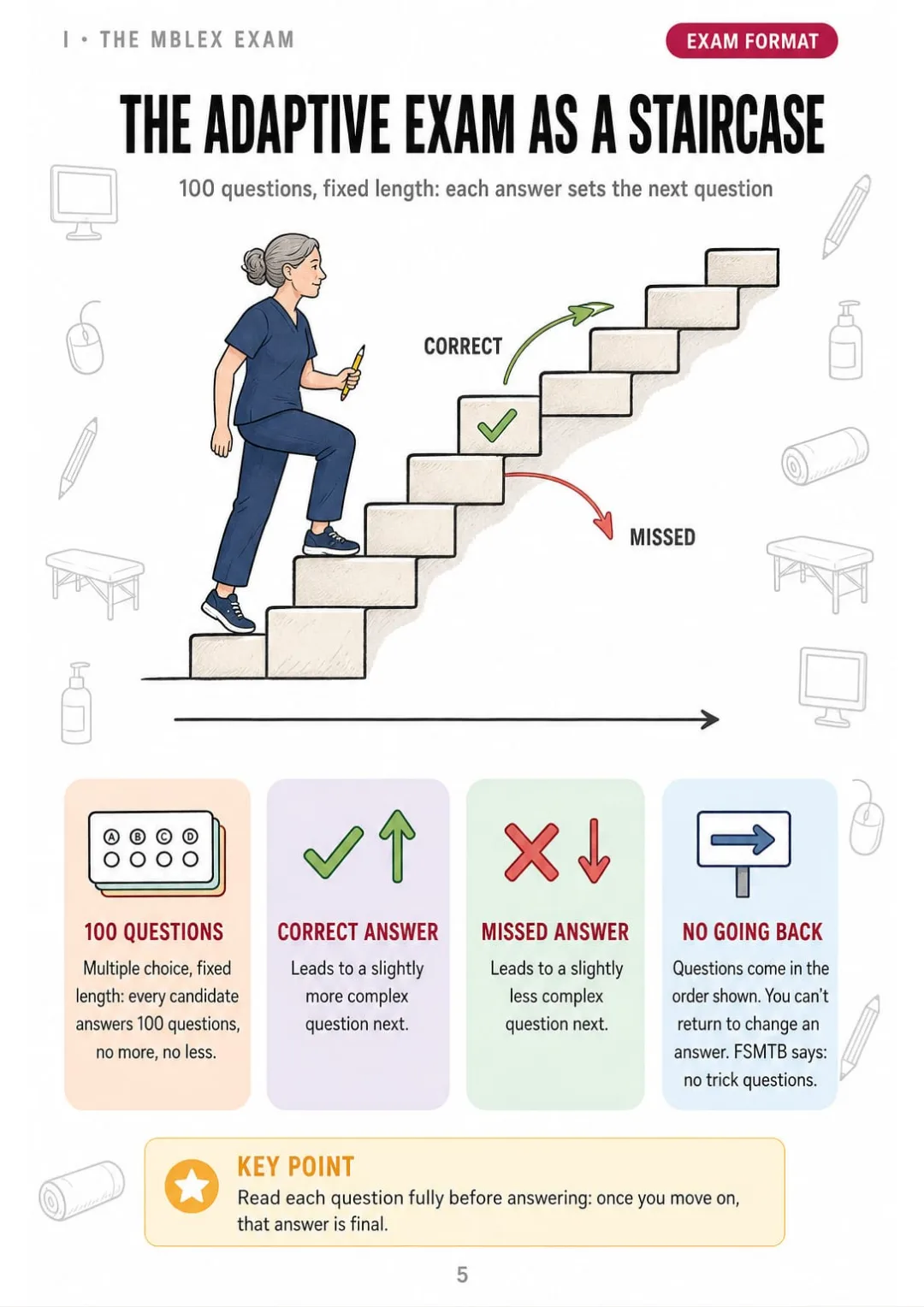
100 questions, computer-adaptive: correct goes up a step, missed goes down, no going back.
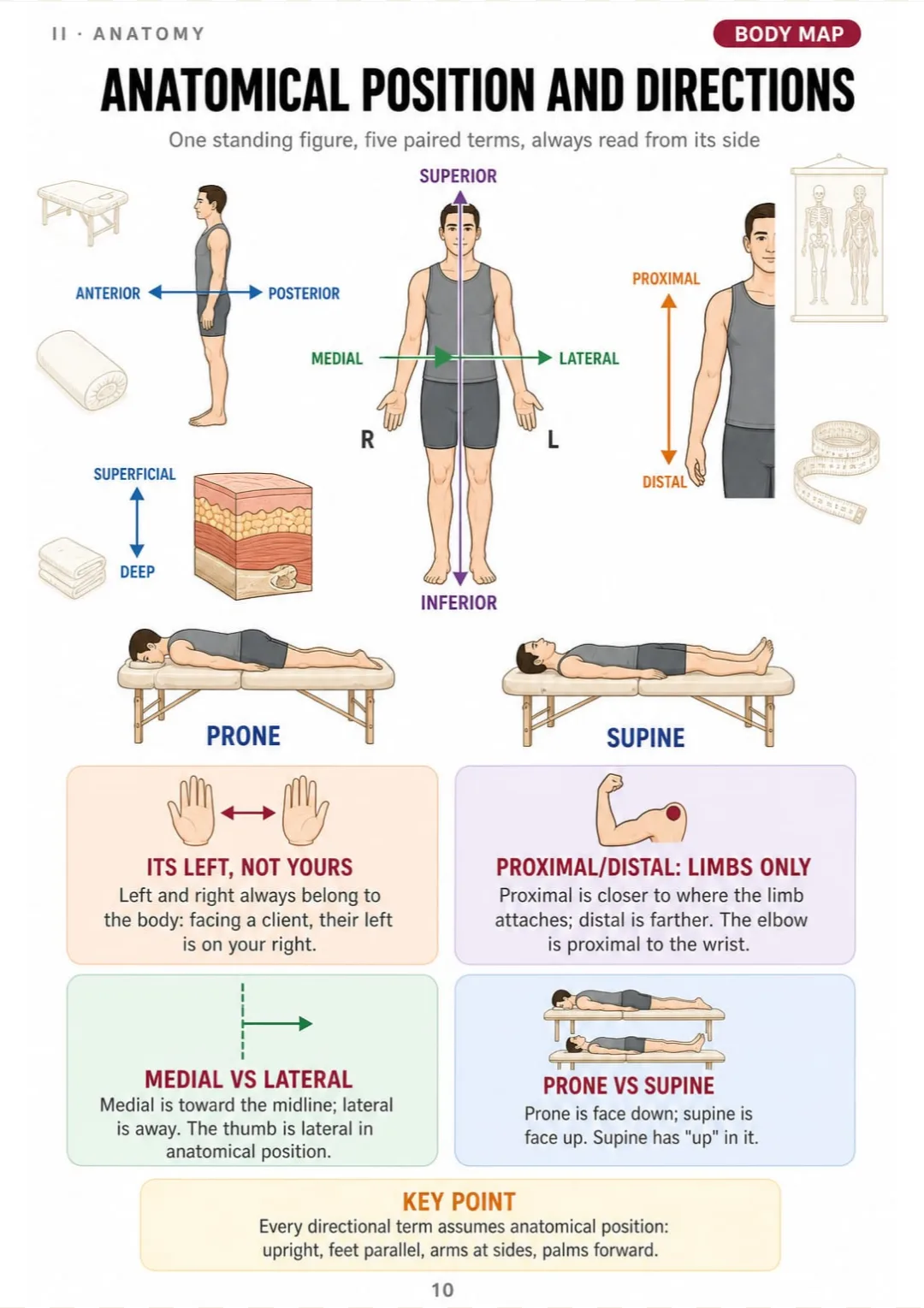
Anatomical position plus 5 paired terms: anterior/posterior, superior/inferior, medial/lateral, proximal/distal, superficial/deep.
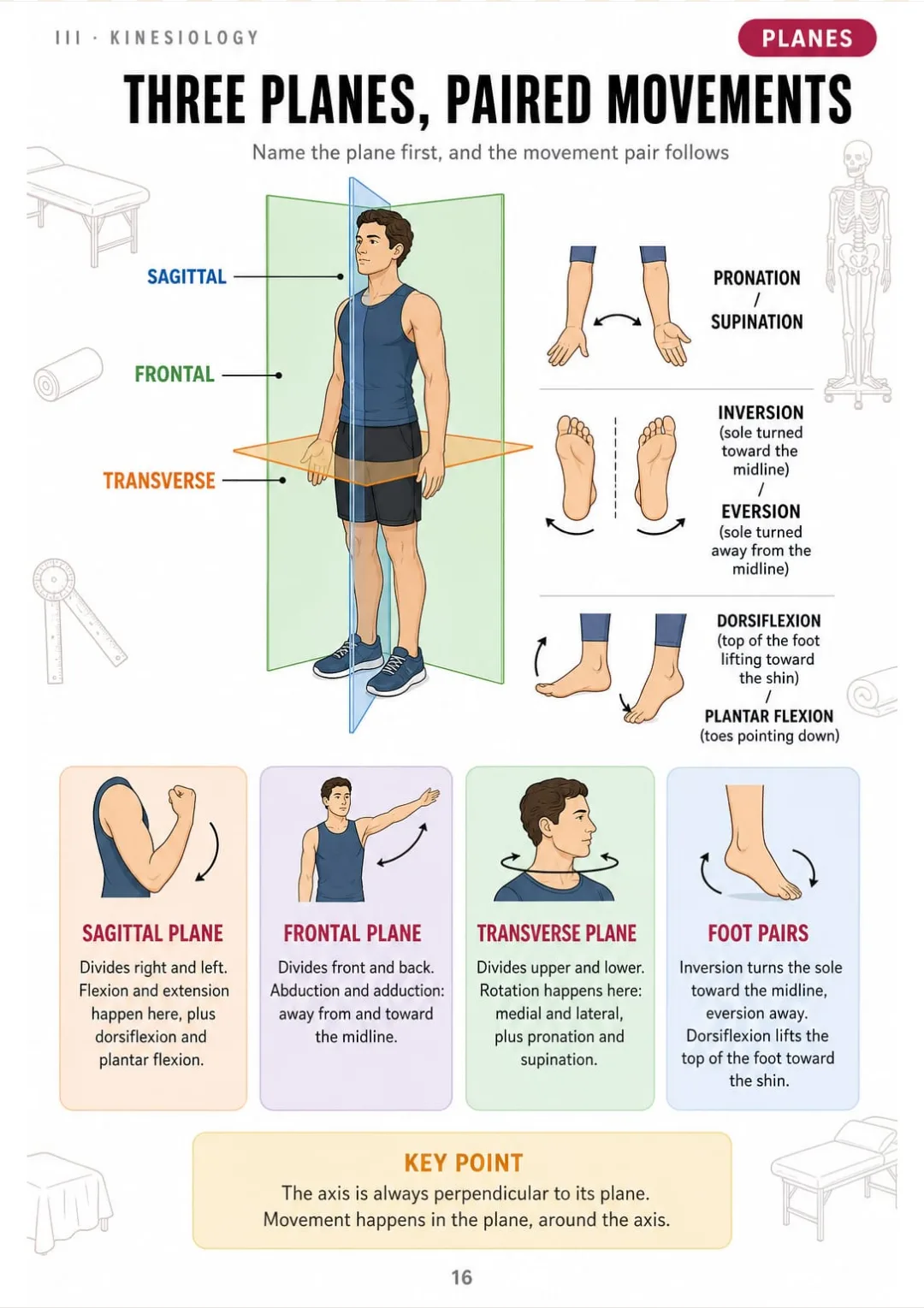
Flexion/extension = sagittal · abduction/adduction = frontal · rotation = transverse
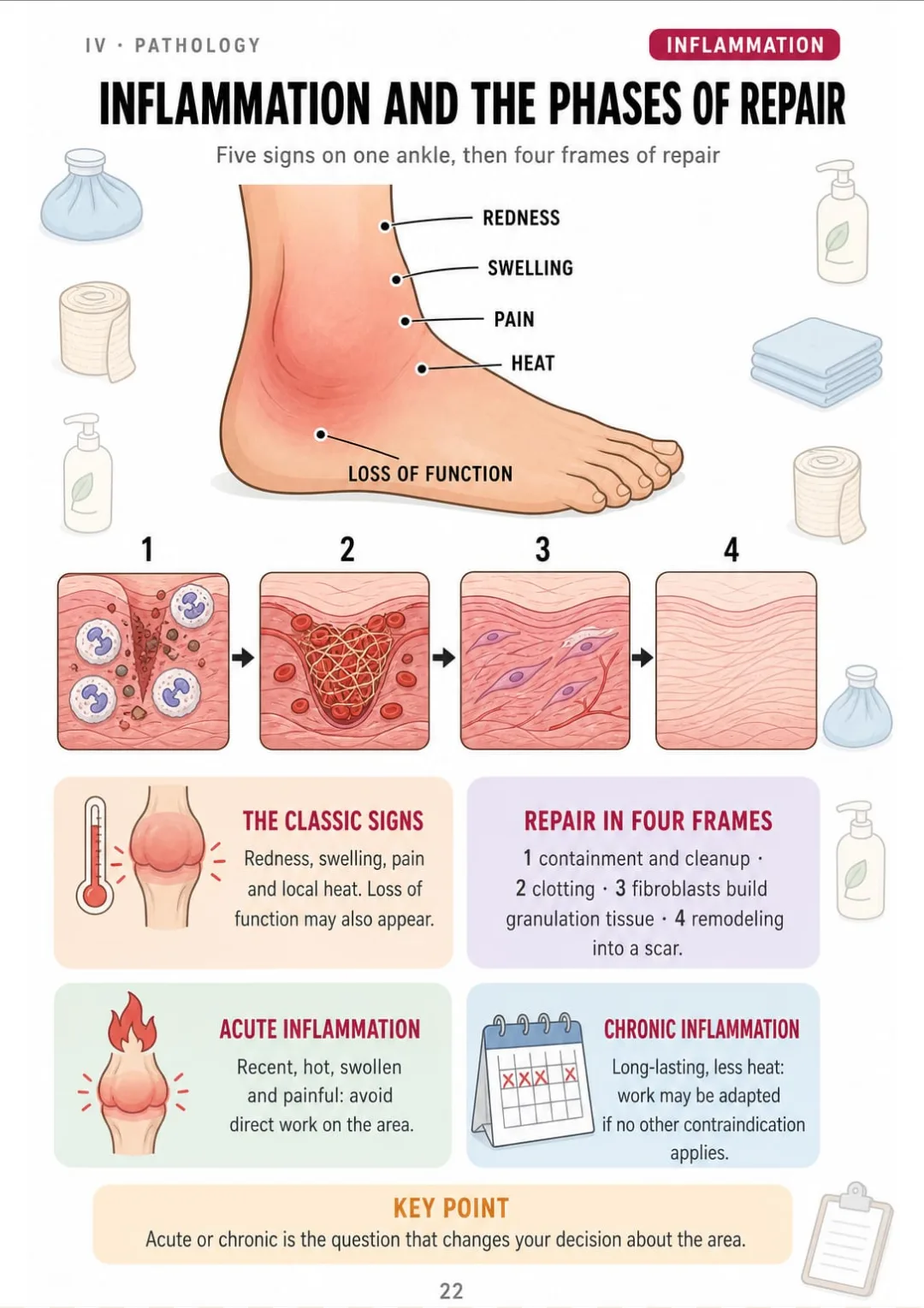
Redness, swelling, pain, heat, loss of function, then repair in four drawn frames.
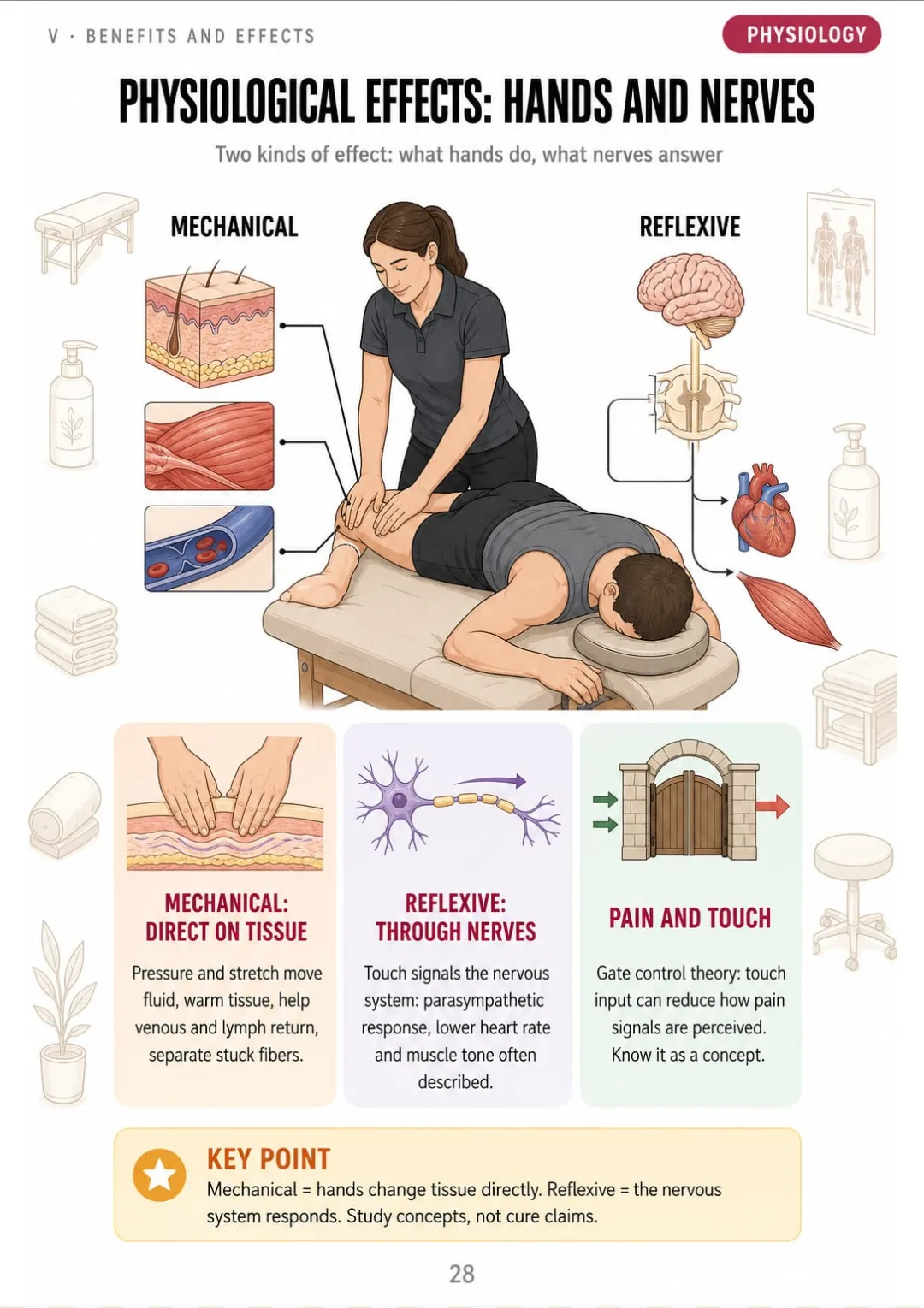
Mechanical vs reflexive effects, drawn on one body
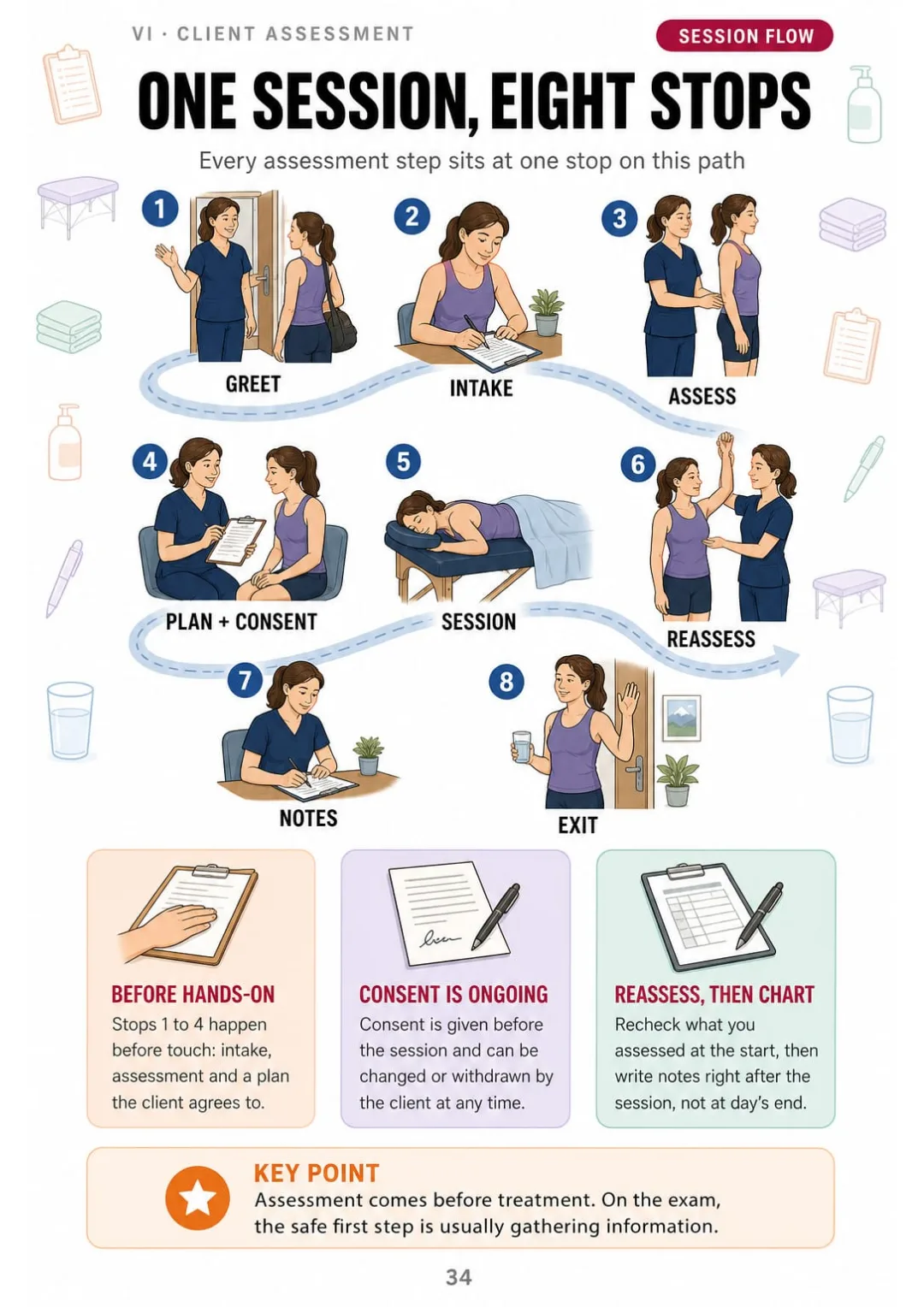
Greet, intake, assess, plan and consent, session, reassess, notes, exit: always in this order.
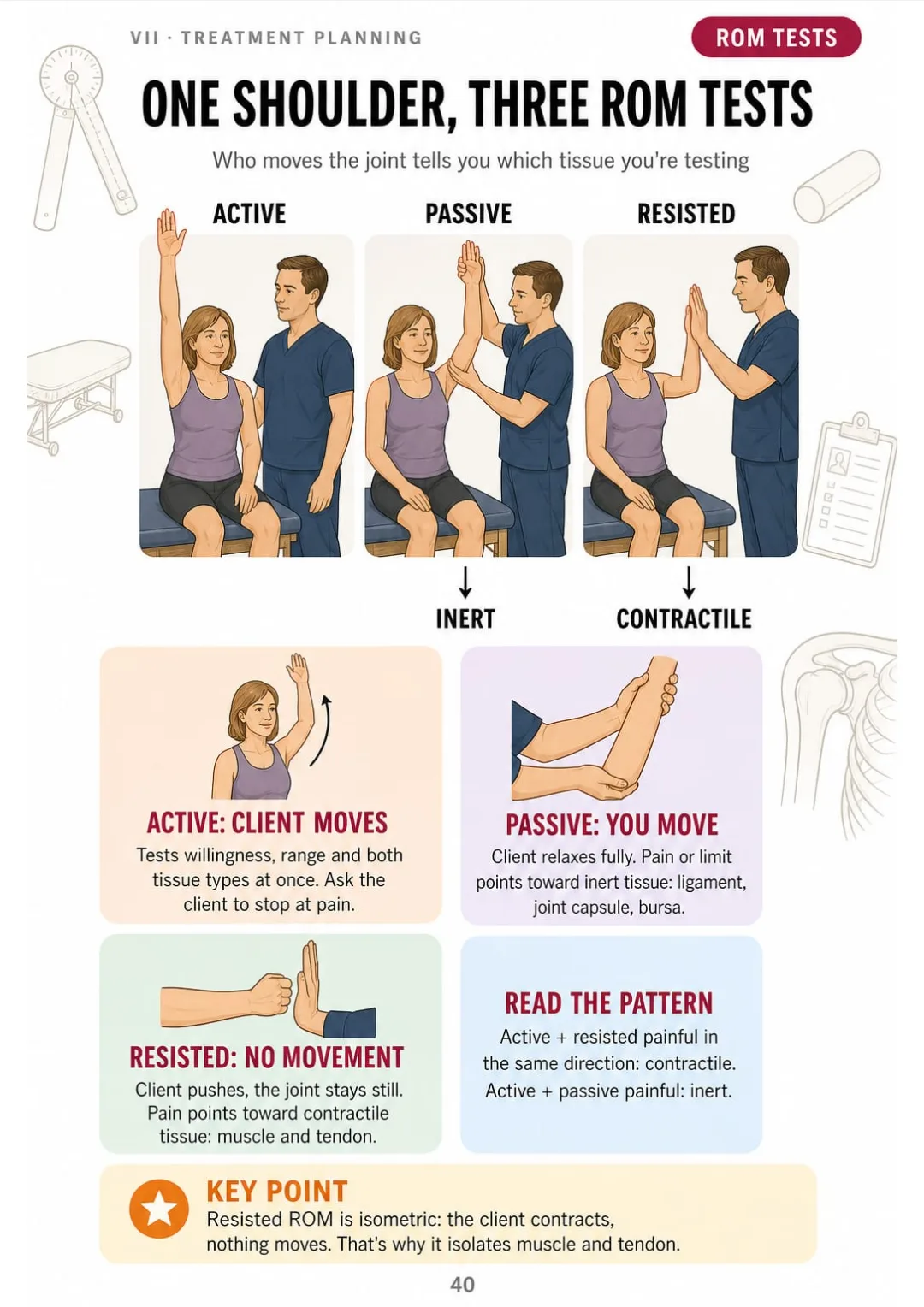
Passive ROM points to inert tissue; resisted ROM points to muscle and tendon.
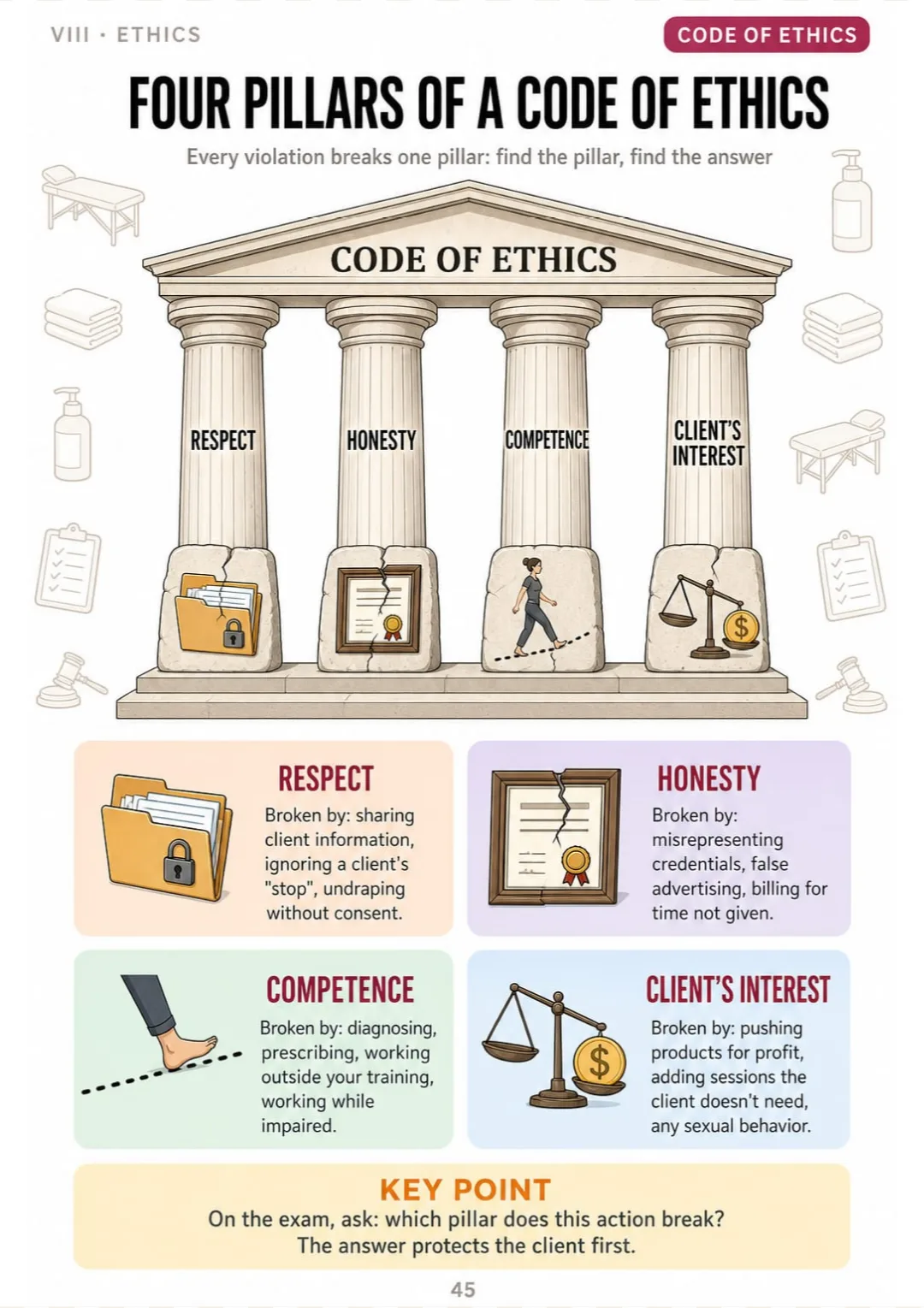
Respect, honesty, competence, client's interest: each violation sorted under the pillar it breaks

Swipe to see more →

These are real pages from the book. The table of contents is the full one: 11 parts and 61 topics.

It's Not That You Can't Remember. It's That No One Put It in Order for You.

You've read three times which plane abduction happens in. You close your notes...

...and you can't tell sagittal from frontal anymore. It was just lines of text, one after another.

Flexion/extension = sagittal · abduction/adduction = frontal · rotation = transverse

Here the three planes are one drawn page: one figure cut three ways, each movement pair sitting in its own plane. Flexion and extension in the sagittal, abduction and adduction in the frontal, rotation in the transverse.

And on the pages next to it, every topic gets its own: origin and insertion, the six synovial joints, lymph flow, local vs general contraindications and the session in eight stops.

First you understand why it works that way. Then the order sticks on its own.

SEE THE DIFFERENCE

Stop Memorizing Terms You Can't Picture:

THIS
  • Your app marks it wrong and moves on
  • Planes and directions without a single drawing
  • On the exam, you don't know where to start
Anatomical position is defined as the body standing erect, facing forward, with the upper limbs at the sides and the palms turned anteriorly. All directional terminology is referenced to this position. Anterior denotes the front and posterior the back; superior indicates a position above and inferior below; medial refers to nearer the midline and lateral farther from it; proximal and distal describe relation to the point of attachment of a limb, while superficial and deep refer to proximity to the body surface.
FOR THIS
  • Every concept drawn
  • One topic per page, with the rules in boxes
  • You remember it because you've seen it
Anatomical position plus 5 paired terms: anterior/posterior, superior/inferior, medial/lateral, proximal/distal, superficial/deep.
CONTENTS

Take a Look at the 11 Parts and 61 Topics

11 parts, 65 pages, 61 topics drawn one per page: from how the exam works to test-day review.

IThe MBLEx Exam · pp. 5-9
  1. How the 100-Question Adaptive Exam Works
  2. The Seven Content Areas and Their Weights
  3. From Application to Authorization to Test
  4. Test Day: Two IDs, Check-In, 110 Minutes
  5. Pass/Fail Results, Retakes and Licensure
IIAnatomy and Physiology · pp. 10-15
  1. Anatomical Position and Directional Terms
  2. Skin Layers and Touch Receptors
  3. Axial and Appendicular Skeleton
  4. Arteries, Veins and Capillaries
  5. Lymph Flow and the Two Drainage Ducts
  6. Spinal Nerves, Plexuses and Dermatomes
IIIKinesiology · pp. 16-21
  1. Planes of Motion and Paired Movements
  2. Six Synovial Joint Types
  3. Muscle Wrappings: Epimysium to Sarcomere
  4. Origin, Insertion and Line of Pull
  5. Agonist, Antagonist, Synergist, Fixator
  6. Contraction Types and Proprioceptors
IVPathology, Contraindications, Special Populations · pp. 22-27
  1. Inflammation and the Phases of Repair
  2. Local vs General Contraindications
  3. Areas of Caution on the Body Map
  4. Special Populations and Session Changes
  5. Medication Classes That Change Your Work
  6. When to Refer to a Health Care Provider
VBenefits and Effects of Soft Tissue Work · pp. 28-33
  1. Physiological Effects of Soft Tissue Work
  2. Psychological Effects of Soft Tissue Work
  3. Stroke Types on One Muscle
  4. Sequence of Application in a Session
  5. Hot and Cold Applications Compared
  6. Massage and Bodywork Modalities Map
VIClient Assessment · pp. 34-39
  1. Organizing a Session from Intake to Exit
  2. Verbal Intake and the Health History Form
  3. Written Data Collection on a Chart
  4. Visual Assessment: General and Postural
  5. Gait Assessment Step by Step
  6. Palpation Assessment Layer by Layer
VIIReassessment and Treatment Planning · pp. 40-44
  1. Active, Passive and Resisted Range of Motion
  2. Ruling Out Contraindications First
  3. Setting Client Treatment Goals
  4. Reassessing Response to Previous Treatment
  5. Formulating a Treatment Strategy
VIIIEthics and Boundaries · pp. 45-49
  1. Ethical Behavior and Codes of Ethics
  2. Professional Boundaries Drawn as Lines
  3. The Therapeutic Relationship and Power
  4. Dual Relationships Spotted Early
  5. Sexual Misconduct and Clear Limits
IXLaws, Scope and Communication · pp. 50-54
  1. Licensure Rules Vary by State
  2. Scope of Practice: No Diagnosing
  3. Informed Consent Before and During
  4. Confidentiality of Client Information
  5. Professional Communication Under Pressure
XGuidelines for Professional Practice · pp. 55-60
  1. Safe Use of Equipment and Supplies
  2. Hygiene, Sanitation and Cleaning
  3. Facility, Practitioner and Client Safety
  4. Body Mechanics at the Table
  5. Draping: Secure and Communicated
  6. Client Records and Business Records
XIReview and Test Day · pp. 61-65
  1. Look-Alike Terms Side by Side
  2. Plane and Movement Match-Ups
  3. Ten Common MBLEx Mix-Ups
  4. Answering Adaptive Questions in Order
  5. Test Day Timeline: Arrival to Result

What If Every Topic Fit on a Single Page?

Picture this:

Instead of rereading half a page on origin and insertion without being able to see it...

...you open the page and find the muscle drawn from origin to insertion, with the pull arrow crossing the joint it moves.

Mechanical vs reflexive effects, drawn on one body

And the planes of motion, lymph flow, contraindications, range of motion and ethics turn into drawings and tables you can read at a glance.

You stop repeating and start understanding.

That's what The MBLEx Sketchbook does: 65 drawn pages in 11 parts, one topic per page, a short exam-style check on each and a final review of look-alike terms side by side. What you see in order is easier to remember.

Because what your brain sees organized, it remembers.

Here Is What You Get with The MBLEx Sketchbook:

Ipp. 5-9

The MBLEx Exam

How the 100-question adaptive exam works, the seven content areas and their weights, from application to authorization, test-day check-in, and pass/fail results and retakes. You walk in knowing how the screen behaves.

IIpp. 10-15

Anatomy and Physiology

Anatomical position and directional terms, skin layers and touch receptors, the axial and appendicular skeleton, blood vessels, lymph flow with its two ducts, and spinal nerves and dermatomes.

IIIpp. 16-21

Kinesiology

The three planes and paired movements, the six synovial joints, muscle wrappings down to the sarcomere, origin and insertion with line of pull, muscle roles and contraction types.

IVpp. 22-27

Pathology, Contraindications, Special Populations

Inflammation and repair, local vs general contraindications, areas of caution, special populations, medication classes that change your work and when to refer out. So when a question describes a client, you know whether to work, adapt or refer.

Vpp. 28-33

Benefits and Effects of Soft Tissue Work

Physiological and psychological effects, stroke types on one muscle, the sequence of application, hot and cold compared and a map of modalities.

VIpp. 34-39

Client Assessment

A session from intake to exit, verbal intake and the health history form, charting, postural and gait assessment, and palpation layer by layer.

VIIpp. 40-44

Reassessment and Treatment Planning

Active, passive and resisted range of motion, ruling out contraindications first, setting goals, reassessment and building a treatment strategy.

VIIIpp. 45-49

Ethics and Boundaries

Codes of ethics, professional boundaries drawn as lines, the therapeutic relationship and power, dual relationships and sexual misconduct.

IXpp. 50-54

Laws, Scope and Communication

Why licensure rules vary by state, scope of practice with no diagnosing, informed consent, confidentiality and communication under pressure.

Xpp. 55-60

Guidelines for Professional Practice

Equipment and supplies, hygiene and sanitation, facility and client safety, body mechanics at the table, draping and records.

XIpp. 61-65

Review and Test Day

Look-alike terms side by side, plane and movement match-ups, ten common mix-ups, answering adaptive questions in order and the test-day timeline.

At the end of the book: A short exam-style check on every page and a final review of look-alike terms side by side.
And That Is Not All: 2 More Books, Free

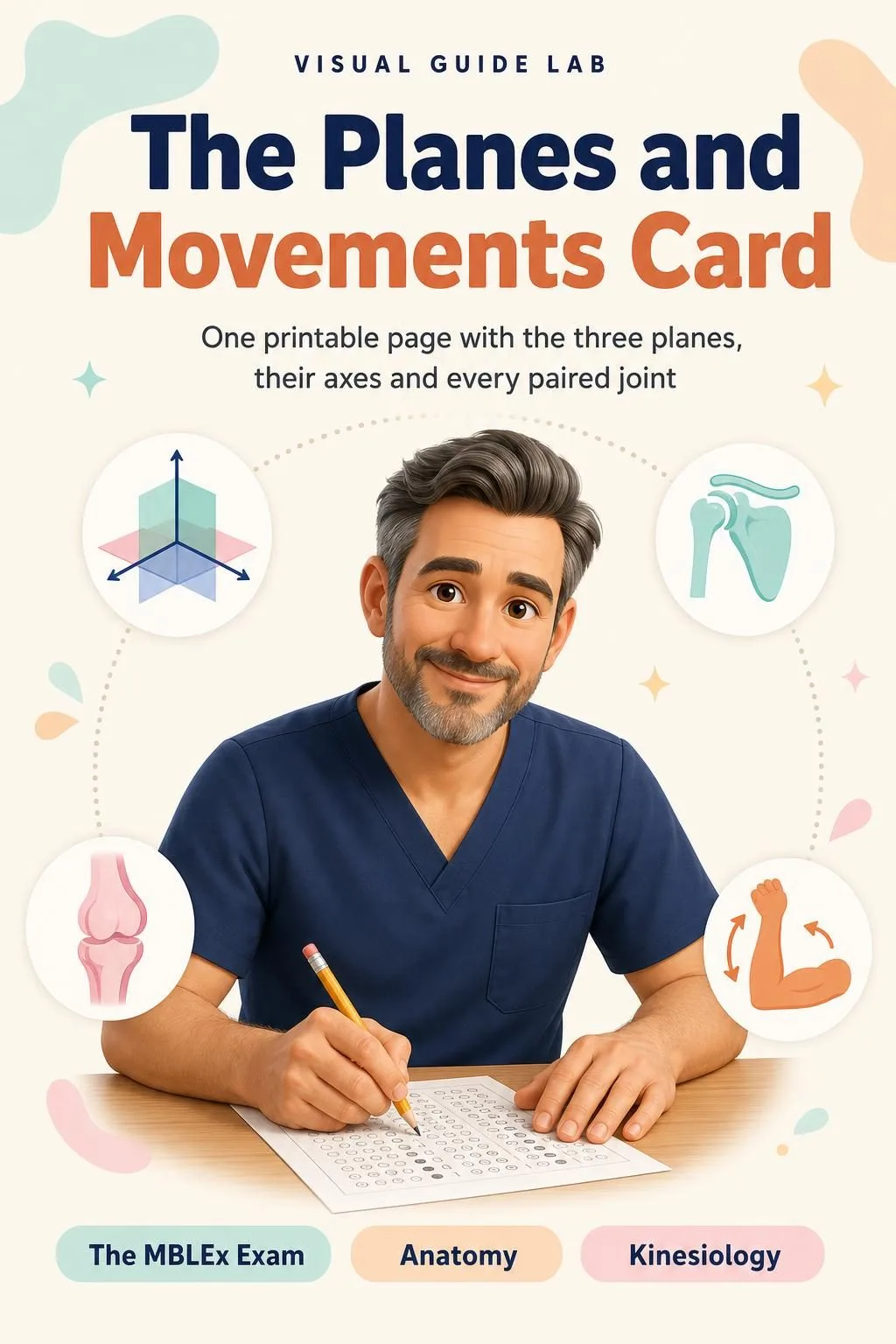
The Planes and Movements Card

BONUS 1: «The Planes and Movements Card»

Value on its own: US$ 17.90

One printable page with the three planes, their axes and every paired joint movement drawn on a simple figure, so you can pair each movement with its plane at a glance before a practice test.

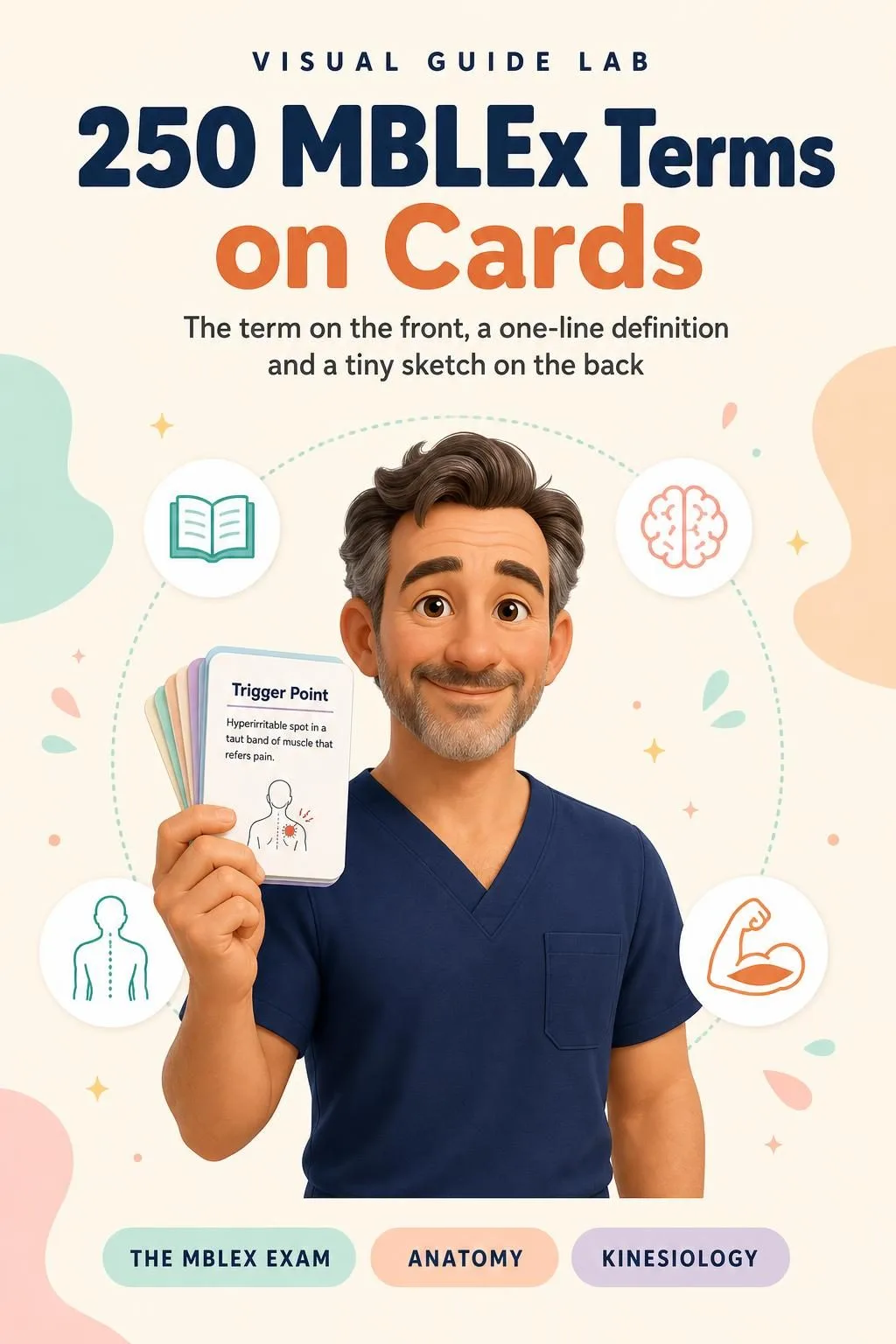
250 MBLEx Terms on Cards

BONUS 2: «250 MBLEx Terms on Cards»

Value on its own: US$ 14.90

The term on the front, a one-line definition and a tiny sketch on the back. Quiz yourself in short sessions, print them, and set aside the ones you keep missing.

The MBLEx Sketchbook + 2 Free Books

  • The MBLEx Sketchbook: 65 illustrated pagesUS$ 87
  • BONUS 1: The Planes and Movements CardUS$ 17.90
  • BONUS 2: 250 MBLEx Terms on CardsUS$ 14.90
  • High-resolution PDF to printIncluded
Total value US$ 119.80
YOUR PRICE:
US$ 37
You save US$ 82.80
YES, I WANT THE MBLEX SKETCHBOOK FOR US$ 37

📄 This is a digital PDF book sent to your email: nothing is printed or shipped.

Secure purchaseEncrypted payment30-day guarantee

PDF by email: The MBLEx Sketchbook reaches your inbox as a PDF, and the two free books come by email too. One-time payment, no installments or hidden costs.

Is This Book for You?

You're finishing massage school

You're finishing massage school

Anatomy, kinesiology and pathology one topic per page, to review between classes and your supervised hours.

Your MBLEx date is coming up

Your MBLEx date is coming up

All seven content areas reviewed in the same order, with a short exam-style check on every page and a final part of look-alike terms side by side.
You're retaking the MBLEx

You're retaking the MBLEx

Open your diagnostic report, find the areas it flagged and go straight to those parts: contraindications in three columns, planes and movements drawn.

To Sum Up: Here Is What You Get

US$ 119.80US$ 37
YES, I WANT THE MBLEX SKETCHBOOK FOR US$ 37

📄 This is a digital PDF book sent to your email: nothing is printed or shipped.

30DAYS
GUARANTEE

30-Day Guarantee

30-day guarantee: tell us what didn't work and we'll refund 100%.

You have 30 days to try The MBLEx Sketchbook and both bonus books. If it doesn't work for you, email us, tell us what didn't work and we'll refund 100% of what you paid. One-time payment, no subscriptions.

Frequently Asked Questions

How do I get it?

It's a PDF by email, sent to the address you enter at checkout. Nothing is shipped: read it on your phone or print it at home. The two bonus books, The Planes and Movements Card and 250 MBLEx Terms on Cards, come by email too.

Is it a monthly payment or one-time?

One-time payment of US$ 37. No installments and no subscription.

Who is it for?

For anyone preparing for the MBLEx: finishing massage school, already graduated with a test date or retaking it with a diagnostic report. It's not a from-scratch course. It doesn't replace your question app or the official handbook: it adds what they don't show, the drawing that explains why an answer is right. Use it next to your app: miss a question, open the page, see the why.

What sources is it based on?

It's built around the seven areas of the MBLEx Content Outline (FSMTB) and the MBLEx Candidate Handbook, with the anatomy checked against OpenStax Anatomy & Physiology 2e. The MBLEx is the same exam in every state that uses it, so the content isn't state-specific. It doesn't cover your state's own jurisprudence exam or rules: check your board's requirements.

Is this official MBLEx material?

No. It's an independent study guide, not affiliated with, endorsed by or approved by FSMTB or Pearson VUE.

Does it replace massage school?

No. It doesn't replace your school's hours, your hands-on training or your state's licensing requirements, and it doesn't give a certificate or CE hours. It's study material, not medical advice: a massage therapist doesn't diagnose or prescribe, and the book says so.

Are the exam-style questions the real MBLEx questions?

No. They're written for this book and are not questions from the MBLEx or any official exam. They're there to practice the reasoning.

Can I print it?

Yes. Print the whole book or just the pages you need. The Planes and Movements Card and the 250 term cards are laid out to print too.

What if I don't like it?

30-day guarantee: tell us what didn't work and we'll refund 100%.

One Last Thing Before You Decide...

You don't have to reread the same page hoping this time it sticks.

You don't have to memorize origins and insertions you can't picture.

And you definitely don't have to walk into the exam not knowing where to start.

There's a simpler way. And it's one click away. Now it's your turn.

One-time payment: US$ 37 · Guarantee: 30 days · PDF by email

YES, I WANT THE MBLEX SKETCHBOOK FOR US$ 37

📄 This is a digital PDF book sent to your email: nothing is printed or shipped.